Guitar, piano, keyboard — what fits which student
There is no single right answer. The best first instrument is usually the one that matches the music you actually want to spend time with.
WhatsApp to askWhich instrument should I start with?
Guitar
Best when the goal is to play songs quickly and accompany singing. Chord-based, portable, and forgiving for beginners.
Piano
Best for students who want the clearest route into music theory and coordination. Two hands working together; reading from day one.
Keyboard
Best for modern sounds, songwriting, arranging, and flexible home setups. Lighter touch than piano.
Singing has its own page. Singing lessons with Jasmine →
A practical starting point for song-based learning
Guitar suits students who want to play songs, accompany singing, and build confidence through chord and rhythm work early on. Beginners typically focus on basic open chords, strumming patterns, and timing — by the end of the first month, most students can play through a simple song from start to finish.
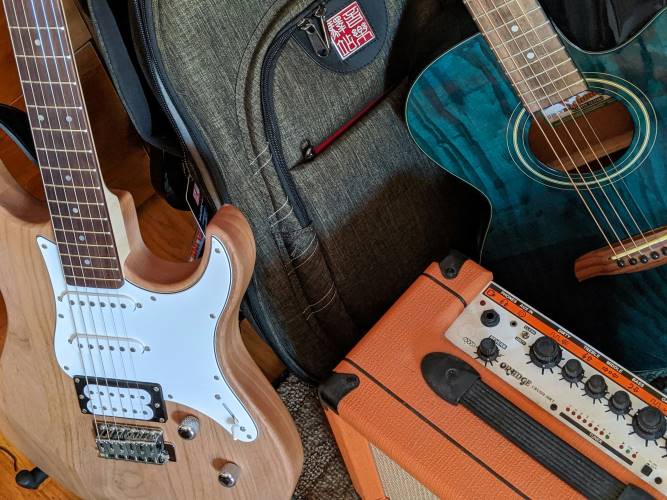
Acoustic guitar
Good for strumming and singing along. No extra gear needed. Common for pop, folk, and singer-songwriter styles.
Electric guitar
Good for riffs, lead work, and amplified styles. Popular for rock, blues and modern pop. Needs an amp.
Which is better for beginners? Both can work well. Acoustic is the simpler default for students who want to strum songs and sing. Electric makes more sense when the student is clearly drawn to electric guitar music.
Strong foundations, different practical setups
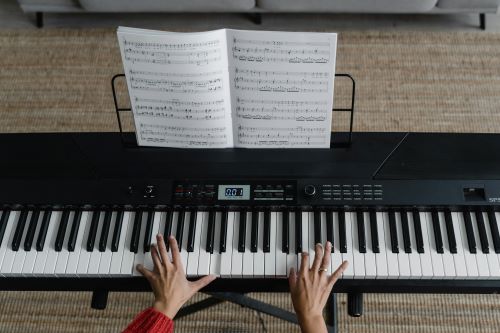
Piano, stage piano, and keyboard can all be used for lessons — but they don't feel the same to play. The most common confusion is between a weighted stage piano and a lighter electronic keyboard. Callysta typically teaches piano on a Medeli-SP-4200 weighted stage piano.
Piano / stage piano
Develops finger strength and control. Better for technique, dynamics, and traditional music reading. The right long-term foundation.
Keyboard
Lighter touch, more sounds, more portable. Better for modern pop harmony and home setups where space is tight.
What to look for if you're buying
For beginner guitar
- Properly set up at the shop (low action, in tune)
- Right size for the student (¾, full)
- Steel-string acoustic, classical nylon, or starter electric
For beginner piano/keyboard
- 88 keys ideally, 76 minimum
- Weighted or semi-weighted keys
- Sustain pedal included
Still unsure which to pick?
WhatsApp for a quick recommendation.